
In Hindu tradition, every stage of life is honoured through sacred rituals known as Samskaras. Among them, the Antim Sanskar — the last rites — hold a unique place. And within that, the Tehravin Sanskar, or the thirteenth-day ceremony, marks one of the most emotional and spiritually significant moments for a family.
The Tehravin is not just a ritual performed after someone’s passing; it is a prayer for peace, a farewell filled with love, and a reminder that life continues beyond physical existence. It represents the completion of the soul’s journey from the material world to the spiritual realm.
The Meaning of Tehravin
The term Tehravin literally means “the thirteenth.” According to Hindu customs, the soul of the departed takes around thirteen days to detach from the earthly plane and move toward Pitrlok, the realm of ancestors.
During these thirteen days, the family observes mourning (shok), maintaining purity, silence, and introspection. The house remains simple — no festivities, loud conversations, or celebrations. Every act during this time is devoted to remembering the soul and praying for its peaceful journey.
The thirteenth day marks a shift — both for the soul and the family. It is the day of release. Through sacred rituals, the family symbolically helps the departed soul move on, while they themselves begin the slow return to normal life.
The Spiritual Importance of the Thirteenth Day
In Hindu philosophy, the body is seen as temporary but the soul (Atman) is eternal. The Thirteenth-Day Ceremony represents this truth — that while the body dissolves, the soul continues its divine journey.
The Garuda Purana mentions that the rituals performed during these thirteen days help the soul cross the threshold between worlds. The fire rituals, offerings, and prayers cleanse residual karmas and guide the soul toward light and liberation (moksha).
For the family, it is an act of surrender — letting go of grief and replacing it with faith. The Tehravin transforms mourning into prayer, sadness into gratitude, and loss into peace.
The Rituals of the Thirteenth-Day Ceremony
The Tehravin ceremony may differ slightly across regions, but the essence remains the same everywhere — devotion, purity, and remembrance.
1. Purification and Sankalp (Resolution)
On the morning of the thirteenth day, family members take a holy bath and wear clean, simple clothes. With the guidance of a priest, they take a sankalp (vow) to perform the rites for the peace and salvation of the departed soul.
2. Puja and Havan (Fire Ceremony)
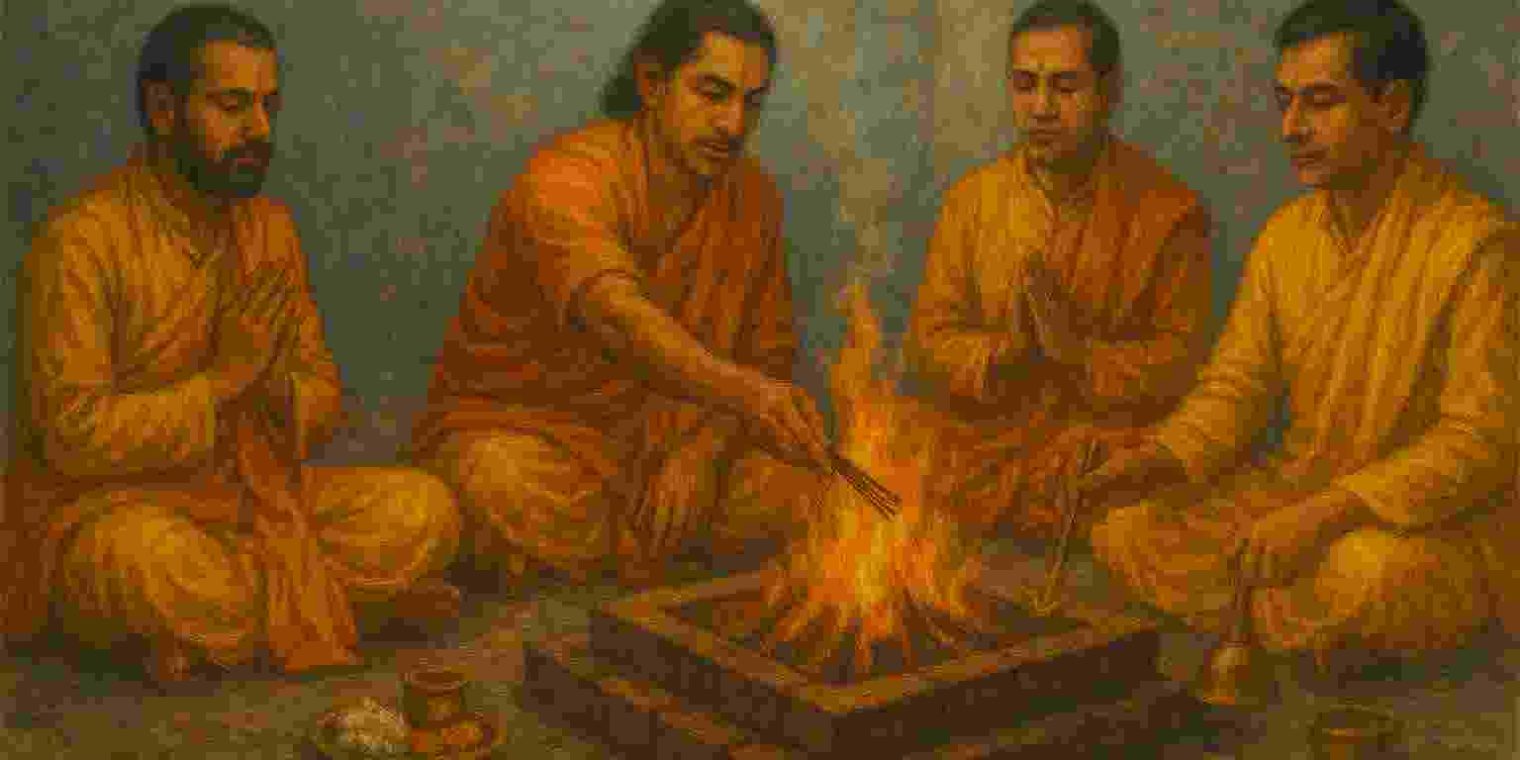
A sacred fire is lit to symbolise transformation. Offerings of ghee, grains, and herbs are made into the fire while Vedic mantras are chanted. It is believed that through Agni (fire), prayers reach the divine and help the soul ascend to higher planes.
3. Pind Daan and Tarpan
The family then performs Pind Daan — offering rice balls mixed with sesame and barley flour — symbolising nourishment for the soul. This is followed by Tarpan, the offering of water to ancestors. These rituals express love and gratitude toward the departed and ensure that the soul finds peace.
4. Feeding the Brahmins (Brahmin Bhoj)
It is customary to invite priests or the needy to a simple meal and offer them clothes or donations. This act of charity (daan) is considered sacred, as it reflects the belief that doing good in the name of the departed brings blessings to both the soul and the family.
5. Community Meal (Tehravin Bhoj)
Finally, the family organises a humble meal for relatives and close friends. This marks the end of the mourning period and the return to daily life. It’s not a celebration but a gesture of gratitude — an acknowledgment of life’s continuity.
Do’s and Don’ts on Tehravin
Do:
-
Maintain cleanliness and simplicity.
-
Light a lamp before the photograph of the departed.
-
Keep the environment calm and prayerful.
-
Offer food or donations in memory of the soul.
Don’t:
-
Play loud music or conduct any celebrations.
-
Display luxury, vanity, or extravagance.
-
Engage in arguments or negative conversations.
The Emotional Meaning Behind the Ritual
Beyond the chanting and offerings, Tehravin holds deep emotional meaning. It helps the family accept the loss, find strength in faith, and reconnect with the cycle of life and death.
The rituals serve as a reminder that love is eternal. Though the person’s physical presence fades, their blessings remain with the family forever. The thirteenth day thus becomes not just a conclusion but a spiritual reunion — between the soul, the divine, and the loved ones left behind.